
AI Merge · Free Healthcare Operations Belief Score
Your organization may already have the answers. Why does your team still have to hunt for them?
Discover the possible operating assumption shaping how your organization moves information, coordinates people, protects sensitive data, makes decisions, serves referral partners, and adopts AI.
Free · Personalized · No credit card · No patient-specific information required
Receive a Healthcare Operations Belief Profile built from the business moment you describe · Based on the published AI Merge methodology
- Four patents held by the creator
- Published in the Mensa Research Journal
- Founder & CIO, TetraNoodle Technologies
What you receive
See the Operating Pattern, Not Just the Symptom
Your Healthcare Operations Belief Profile may show:
the recurring business moment
the current operating response
the legitimate operational friction
a possible operating belief
the cost or unrealized opportunity
the earliest moment to watch
one bounded piece of next evidence
Built from real healthcare operations patterns across information access, intake, scheduling, finance, governance, sales, and growth.
The Recurring Business Moment
A familiar leadership question becomes a new manual research project.
A Possible Operating Belief
“The information is available because a capable employee can eventually reconstruct it.”
Moment to watch
“Who knows where that information is?”
First evidence
One question answered through a reusable, traceable path.
Before you scroll past
You May Already Be Thinking:
“We already know where the problems are.”
Or:
“This is a systems, staffing, or data issue, not a belief issue.”
That may be true.
The Healthcare Operations Belief Score is not asking you to replace a technical explanation with a psychological one. Systems may be fragmented. Capacity may be limited. Security, privacy, clinical, financial, and compliance constraints may all be real.
Inside those real constraints, what assumption does the organization repeatedly act as though true?
For example:
If the information exists somewhere, the right employee should be able to find it.”
Because some cases require judgment, the entire workflow must remain manual.”
Providing access to AI will create adoption.”
Referral growth depends mainly on the sales relationship.”
The result is a hypothesis to examine, not a verdict about the organization.
Sound familiar
The Question Has Been Answered Before
Watch one familiar moment turn into a fresh research project , the same way it does every time.
- 1The Question
“Why did this result change? What happened with this referral source?”
A leader asks something the organization has effectively answered before. The information exists. It always does.
- 2The Search
Some is in the EHR. Some in the CRM. Some in finance. Some in one person's head.
Operations starts searching. Finance pulls another report. Someone reconciles definitions. An experienced employee fills the gaps.
- 3The Reconstruction
Eventually, the organization produces an answer, and it looks like the process worked.
But the reasoning, sources, and path stay with the people who rebuilt it. The next familiar question becomes a new investigation.
The reinforcing loop
Question appearsseveral people searchexpert fills the gapsanswer is producedmanual reconstruction gets the creditthe next question follows the same path
The organization may not have an information problem. It may have a problem turning stored information into usable intelligence at the moment of work.
Free · Personalized · No credit card · No patient-specific information required
Why now
Your Organization Has More Intelligence Than Its Systems Can Usually Show
Making years of accumulated intelligence usable once required a large integration project, a specialized reporting team, or repeated manual reconstruction.
New AI and retrieval capabilities can make a smaller starting point possible: one approved question, one source set, one department, one workflow, one carefully governed proof.
Technology can help organize approved intelligence.
People remain accountable for interpretation and action.
A bounded first proof creates the evidence that matters.
Intelligence you already hold
Years of it, rarely surfaced at the moment of work:
- Operational records
- Referral history
- Policies and procedures
- Financial information
- Survey feedback
- Sales activity
- Exception-handling knowledge
- Staff expertise
The mechanism
Your Score Creates a Business Belief Map
The score focuses on one healthcare operations moment that matters now. Not the entire organization, one repeated business situation, broken into five connected stages.
- 01
The Repeated Business Moment
What keeps happening? For example:
A familiar leadership question requires several people to search different systems.
- 02
The Current Operating Response
What does the organization do next?
Search, escalate, reconcile, re-enter, ask the expert, delay, create a workaround, add another approval, then return to the same manual path.
- 03
The Real Friction
What legitimate constraints must remain visible?
Data quality, staffing, changing requirements, professional judgment, system limits, privacy, security, regulation, unclear ownership. The score does not erase these.
- 04
The Possible Operating Belief
What might the organization repeatedly act as though true?
“Quality requires every case to follow the expert path.”
A possible interpretation, not an established fact.
- 05
The First Evidence
What small, observable result would suggest another reality is possible?
One recurring question answered through an approved, reusable path. One document class split into routine and exception handling.
Free · Personalized · No credit card · No patient-specific information required
One business moment · One personalized profile · One possible first-proof direction
From your words to your profile
See How the Healthcare Operations Belief Score Works
- 1
What the Operations Leader Describes
“When leadership asks a cross-functional question, several people search different systems. We eventually find the answer, but the next question starts the whole process again.”
- 2
The Repeated Business Moment
A familiar question becomes a new manual research project.
- 3
The Current Operating Response
Operations, finance, sales, and experienced staff reconstruct the answer from separate sources.
- 4
The Real Friction
Definitions differ. Access is restricted. Source quality varies. Some context is tacit. Leadership judgment remains necessary.
- 5
A Possible Operating Belief
“If the information exists somewhere, the right employee should be able to find and interpret it.”
- 6
The Moment to Watch
The first point where a familiar question becomes a fresh investigation.
Example Healthcare Operations Belief Profile
Illustrative example- Your Repeated Operating Moment
Leadership asks for an answer the organization has effectively produced before.
- Your Current Operating Response
Several teams search separate systems, reconcile definitions, and rely on experienced employees to rebuild context.
- The Real Friction
The systems were designed for different purposes. Access, definitions, data quality, and human interpretation genuinely matter.
- A Possible Operating Belief
“The information is available because a capable employee can eventually reconstruct it.”
- What This May Be Costing
Repeated staff research, decision delay, expert interruption, inconsistent answers, limited reuse of organizational history.
- The Moment to Watch
When the first response to a familiar question is: “Who knows where that information is?”
- What First Evidence Could Look Like
One approved operational question answered through a repeatable, source-grounded process with named ownership and human verification.
Your actual profile will be built from the business moment you describe.
The example above does not predict your result. The score offers an operating hypothesis for you to examine, correct, refine, share, or reject.
Free · Personalized · No credit card · No patient-specific information required
What becomes possible
The Goal Is Not to Transform the Entire Organization Overnight
The systems may remain. The staffing constraint may remain. Professional judgment may remain essential. The first shift is smaller.
- 01A familiar question does not require the same full reconstruction.
- 02A routine document does not travel the same path as a true exception.
- 03A department receives the sources it needs, and not the ones it should not see.
- 04A representative enters one account conversation with approved, relevant intelligence.
- 05A provider completes one referral through a clearer workflow.
One bounded change does not make the organization “AI transformed.” It creates something more useful:
Evidence that the organization can make its own intelligence more available, governed, and reusable.
That evidence can then determine what deserves expansion.
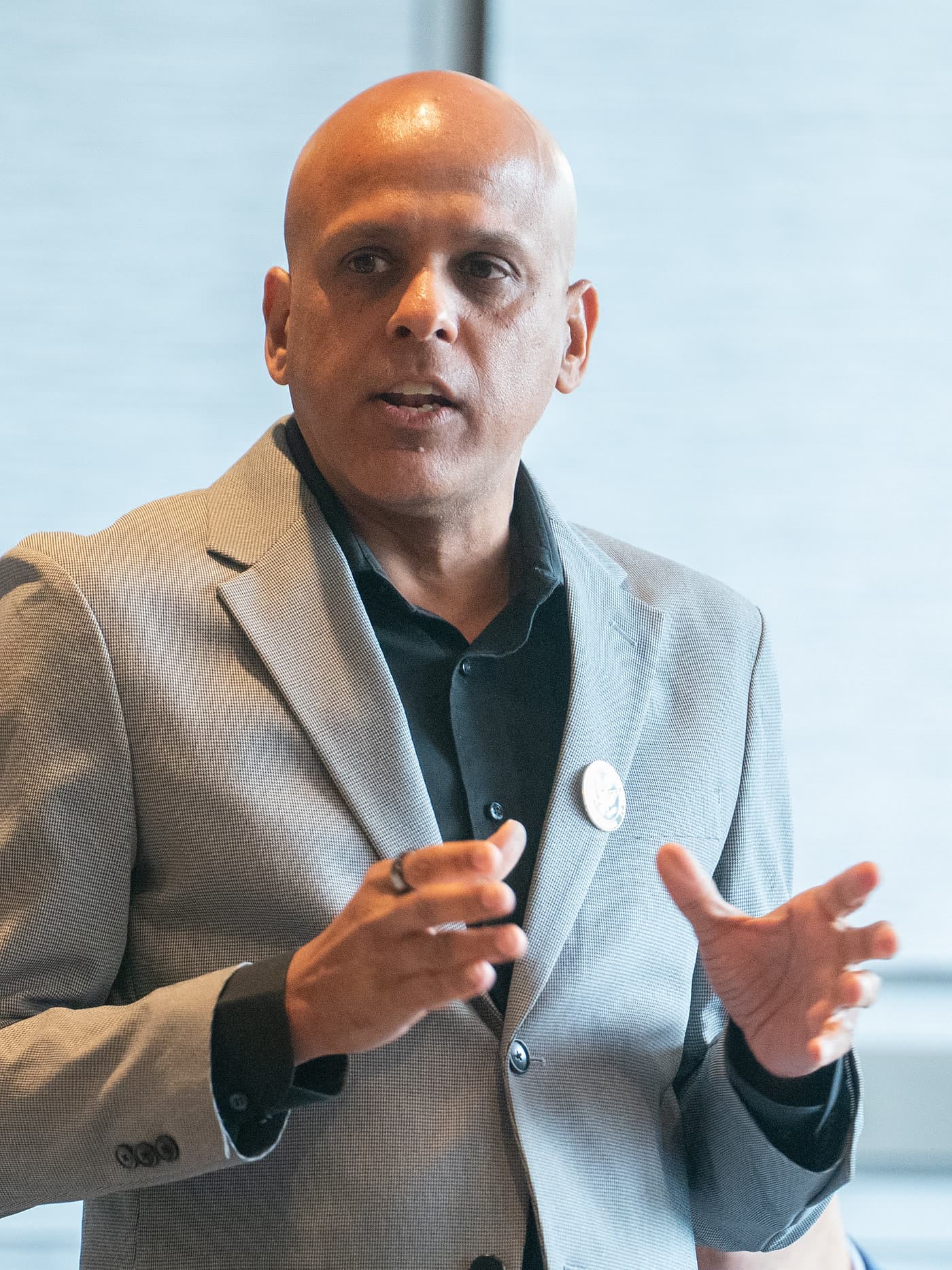
The person behind it
Why I Created AI Merge
“Organizations rarely fail because nobody inside them knows the answer. More often, the answer is fragmented.”
One part lives in a system. One part lives in a process. One part lives in the judgment of experienced people. One part is understood by leadership but difficult to transfer.
I spent years building AI and enterprise systems and repeatedly saw the same limitation: technology could store more information, move it faster, and automate parts of the workflow, but it did not automatically make the organization more intelligent.
That required something else: making approved intelligence accessible, preserving human judgment, aligning people around the work, designing clear boundaries, and turning one successful use case into organizational capability. AI Merge was created to connect those layers, not to make technology the authority, but to help organizations use AI while strengthening the human and collective intelligence that gives the technology meaning.
Manuj Aggarwal
About the Creator
- Founder and CIO, TetraNoodle Technologies
- Creator of AI Merge
- Enterprise AI and technology leader
- Holder of four patents
- Published in the Mensa Research Journal
Professional Experience Behind AI Merge





Organizations shown reflect prior professional experience by Manuj Aggarwal and do not imply endorsement of AI Merge, the Healthcare Operations Belief Score, TetraNoodle Technologies, or this offer.
Built around real moments
Built Around Real Healthcare Operations Moments
The score is informed by recurring patterns seen in real operational work.
Referral and Document Intake
Incoming referrals arrive as variable, multi-page, incomplete, or separately transmitted documents. The challenge is not only extraction, it is what belongs together, what is missing, what is routine, what needs judgment, and what should happen next.
Cross-System Business Questions
Financial, operational, sales, survey, and administrative information exists across several systems. The organization can answer the question, but the path to the answer stays manual and hard to repeat.
Secure Internal AI
Different departments need different sources: sales needs approved account intelligence, operations needs procedures, finance needs restricted information. The challenge is not giving everyone access, it is defining governed usefulness.
Scheduling and Capacity
An open appointment does not always mean a patient can be scheduled. The real decision may involve service requirements, provider fit, referral status, authorization, capacity, urgency, and missing information.
Referral Growth
A willing provider may still fail to complete the process because the ordering or referral workflow is difficult. The visible problem looks commercial; the operating cause may be partly procedural.
In their words
What People Have Noticed Working With AI Merge
Experiences reported by AI Merge participants, in their own words. Tap any clip to listen.
Individual experiences vary. These accounts reflect the broader AI Merge experience, not the free Healthcare Operations Belief Score, and do not guarantee that another organization will experience the same result. Approved operating and buyer proof is added here as each item is sourced, permissioned, and verified.
Keep what works
This Is Not Another Generic AI Readiness Assessment
A business-intelligence platform may report what happened. A workflow system may move tasks. An EHR may hold clinical and administrative information. A CRM may support account and referral activity. A security assessment may examine risk. A compliance review may examine legal obligations. An operational consultant may redesign a process.
Keep what works.
The Healthcare Operations Belief Score examines a different layer:
What does the organization repeatedly act as though true when the same operating moment appears?
It does not certify that the organization is ready for AI. It does not diagnose the culture. It does not replace an operational audit. It does not recommend autonomous clinical decisions. It does not determine HIPAA compliance. It does not assign blame to staff or leadership.
It helps make one operating assumption visible enough to examine , and one bounded evidence opportunity easier to identify.
The process
How the Healthcare Operations Belief Score Works
- 01
Choose One Repeated Business Moment
Focus on one situation, a familiar question that requires repeated research, a highly manual referral workflow, a scheduling decision that leaves the system. Not the whole organization.
- 02
Describe What Happens
Answer a short set of guided questions in your own words. No consulting language, no complete data, and no patient-specific information required.
- 03
Receive Your Belief Profile
The repeated business moment, the current response, the real friction, a possible operating belief, the cost or opportunity, the moment to watch, and one piece of next evidence.
- 04
Decide What Fits
Treat the result as a structured operating hypothesis. Review it, correct it, share it with the right stakeholders, refine or reject what does not fit.
The score supports thinking. It does not replace accountable organizational judgment.
Free · Personalized · No credit card · No patient-specific information required
Essential Questions
What is a “business belief”?
A business belief is not a private thought held by the organization. It is a possible operating assumption the organization repeatedly acts as though true.
It may be visible through workflow design, ownership, escalation, incentives, system configuration, repeated decisions, approval patterns, and leadership behavior. The score treats that assumption as a hypothesis, not an established fact.
Does the score claim belief causes the operational problem?
No. Healthcare operations conditions may result from staffing, software, data quality, regulation, privacy, security, financing, external vendors, changing demand, professional judgment, unclear ownership, or genuine capacity limitations.
The score examines one possible assumption operating inside those realities. It does not replace a technical or operational explanation.
Is this an operational, financial, security, compliance, or clinical audit?
No. The Healthcare Operations Belief Score is an educational and strategic reflection tool.
It does not certify operational performance, financial accuracy, cybersecurity, privacy, HIPAA compliance, legal compliance, clinical safety, or AI readiness. Qualified specialists should be involved where those judgments are required.
Can one person accurately score the whole organization?
No single respondent represents the complete organization. The result reflects the perspective and operating moment described by the person completing it.
It may be useful as a conversation starter, an executive hypothesis, a discovery input, or an initial route toward a bounded proof. It should not be treated as a complete organizational diagnosis.
Should we enter patient, employee, financial, or other sensitive information?
No patient-specific information should be required. Do not enter names, dates of birth, medical-record numbers, identifiable clinical details, account credentials, restricted financial records, or confidential employee information.
Describe the operating pattern without exposing protected information.
Is AI deciding what is true about the organization?
No. Technology helps organize the information the respondent chooses to provide. It may identify relationships across events, responses, decisions, friction, consequences, and repeated language.
The system suggests a possible operating pattern and belief for review. People remain responsible for determining what is accurate and what action is appropriate.
What if the profile feels inaccurate?
Treat it as a hypothesis. Keep what fits. Correct, refine, or reject what does not.
Where the issue matters commercially or operationally, compare the result with another stakeholder, actual workflow evidence, system data, source documents, or qualified professional review.
Is the complete profile really free?
Yes. You receive the complete free Healthcare Operations Belief Profile before any paid offer is presented. No credit card is required.
Afterward, you may be offered an optional Healthcare Operations Belief Action Blueprint designed to help define the earliest intervention point, a bounded first-proof opportunity, the necessary stakeholders, governance requirements, and an initial evidence plan. The paid next step is optional.
View privacy, technology, research, and governance details
Privacy and Data
Before publication, the published policy discloses what is collected, its purpose, storage, retention, human review, vendors and subprocessors, model-training policy, access and deletion procedures, marketing-follow-up consent, and jurisdiction.
Technology
The system uses information supplied by the respondent to help organize the business moment, the current response, the friction, the possible operating assumption, the consequence, and the next evidence.
It does not independently access EHRs, financial systems, email, CRM, employee systems, patient records, or internal company files, unless a later, separately approved implementation explicitly provides governed access.
Research and Methodology
The AI Merge methodology combines established concepts from learning, expectations, behavioral reinforcement, identity, human performance, decision-making, organizational systems, and AI-supported pattern analysis. It should be treated as a strategic reflection tool unless direct validation research establishes stronger claims.
Governance
A free score does not authorize system access, AI deployment, workflow automation, data transfer, vendor selection, employee monitoring, clinical use, or financial action. Those require separate organizational review and approval.
You already know where the same operating friction keeps appearing. Now see what the organization may be repeatedly acting as though true.
Choose one healthcare operations moment. Describe what happens. Receive your personalized Healthcare Operations Belief Profile showing:
- The repeated business moment
- The current operating response
- The real friction
- A possible operating belief
- The business cost or opportunity
- The moment to watch
- The first evidence worth considering
Free · Personalized · No credit card · No patient-specific information required
Your profile is a starting point for organizational inquiry. Not a final statement about the business.